
News from the Homestead: Sad tidings of hives and hens
Sadly, the brutal warm/thaw of late January and early February spelled disaster for my three bee hives, reducing me to tears and soul crushing goodbyes to thousands of Wittbrich Acres residents. After gracing our property and thriving through the 2025 honey season while producing more than 150 pounds of golden goodness, my two purchased colonies and one rescued swarm succumbed to the elements. While it’s actually more surprising to have even one colony successfully over-Winter given the less than 50% likelihood, it doesn’t make the discovery of their demise any easier on this still-novice beekeeper.
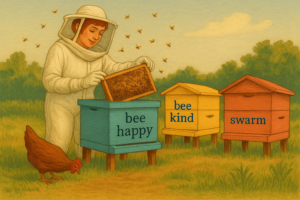
Image created using AI because I can’t take a selfie when I’m working with the bees and Mike stays far away as possible when I open the hives.
Last February in this column I wrote of finding the two colonies I “inherited” with the purchase of Wittbrich Acres hadn’t made it. At that time, I sought comfort in knowing that it was all a new experience, that I knew practically nothing about caring for our precious pollinators, and that I would be so much better equipped with knowledge and skill for subsequent winter seasons. With the purchase of two healthy colonies and robust queens from Droughtville Farms last April, I diligently undertook the task of helping the bees get firmly established. Then in May, I had the rare fortune of capturing a wild swarm that had installed itself in a tree in a friend’s front yard. Donning my bee suit and my courage, I climbed a ladder and shook free a well-populated swarm in need of a new home. I gladly gave them that and added the care of them as my adopted third colony to my beekeeping chores.
Bee happy, bee kind
My bees filled my summer with all sorts of learning opportunities, adventures, skill-building, and the occasional sting. Sporting the names “Bee Happy,” “Bee Kind,” and “Swarm,” I kept meticulous records of apiary activities for my three very active and thriving hives. I continued with my beekeeping training offered by the Racine Kenosha Beekeeping Association which is jammed packed with useful information and tips. With the help of my bee-mentors, Tim, Bruce, and Jim, and fellow beekeeping friends Pete and Sheila, I knew that “in the moment” help was readily available for any questions and concerns that came up.
I treated “my girls” with deserved respect as I went about the tasks of removing honey-laden frames, inspecting brood production, providing mite treatments, and preparing the hives for the late summer dearth when nectar sources are significantly reduced. I fought off robber bees, yellowjackets, mites and mice that threatened my hives. I extracted and bottled more than 90 pounds of honey and proudly shared the sweet bounty with family, friends, and clients. I built a wind block out of bales of hay to help deflect the relentless westerly winds that howl across the Acres in winter and I insulated the hives with wraps and plastic and added foam in the top covers. I made sure there was 60 pounds of honey in each hive and built sugar boards to supplement their feeding through the fast-approaching cold where they would not be able to leave the hive.
In the end, these efforts proved to be insufficient. Bees are so important to our environment, losing them weighs heavy. They are fascinating to observe and I consider it a gift to be able to learn about them and to contribute to their short, but impactful lives. My hives now stand empty in my bee yard, absent of their buzzing activity until I seed them with new colonies again in April, a rather pricey investment. This year my plan is to purchase three, and maybe I’ll be fortunate again in capturing a wild swarm for a fourth hive (although that is very rare according to my bee mentors, all of whom envied my first-year luck).Currently, I’m easing my feelings of loss by ensuring my equipment is cleaned and prepared for the upcoming season when I’ll start the process over again. Mike is getting in on the action by arranging to have our front acreage over-seeded with white clover which will provide a nectar rich food source for our bees-to-be as well as being great for the overall environment by enriching the soil and reducing the need for mowing.
Update on the OG
Compounding my loss this month was the death of two of my sweet hens. Both were members of the OG (original group) that came with the property but none of the less loved by us both. Even with the protection afforded by a heated coop and automatic doors that help keep them safe, the bitter cold proved too much for old-gal Poopsie (aptly named for…well…you get the reason). After having lunch with my friend Carol, an experienced chicken tender herself, we visited my coop together. There we found Ophelia who was in obvious distress from being egg-bound. It was both Carol and my first experience with this life-threatening affliction and we worked together as a team to try and administer aid. In the end, Ophelia simply did not have the strength to pass the stuck egg and died later that night. If any good could come from it, I donated Ophelia to a contact of Carol’s who is studying post-mortem livestock as part of her academic pursuits. Maybe Ophelia will help advance science. Our flock now stands at 26 hens and 3 roosters.
Looking toward spring: Honey, herbs & hope
Looking forward, Spring is coming and I’m starting to think about what will and will not go into my garden. Rather than planting things I know don’t thrive here, I’m turning my focus toward medicinal plants and herbs this year. I’ve ordered 25 elderberry and hazelnut seedlings from the Racine County Land & Water Conservation Tree Program to enhance our landscape and eventually contribute to my source for elderberry syrup, an immune booster my family has come to rely upon.
So those are the updates for this month. Thanks as always for reading! Until next month, I’ll end with a sentiment from my sadly vacant Wittbrich Acres hives, be happy and be kind.
For previous News from the Homestead updates visit our website’s NEWS section.