News from the homestead: Bee humble
Looking back over past posts, I realized that I do not give my bees enough attention. Not wanting the chickens to get all the glory, I’ll dedicate this post to my flying wonders who share their space and singular beauty with me throughout the spring and summer.
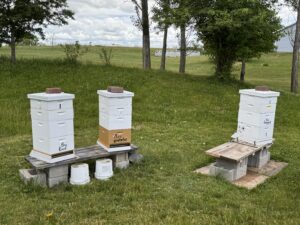
After an unsuccessful and humbling attempt at overwintering my bees, three new setups arrived a whole month later than expected. That’s a big deal, given here in Wisconsin, our season is fleeting and every day makes a difference in hive population, strength, and production capacity. Worker bees live a very short life; only five or six weeks.
While I was expecting my hives to arrive in late March, they didn’t come until late April, which is practically a lifetime in bee years. And it means I have far fewer bees than I should at this point.
Spring and early summer are vital times when the workers collect pollen to convert to bee bread to feed baby bees and nectar to turn into honey. The nectar flow slows around the end of June and the bees turn their efforts to processing the collected nectar into honey stores for winter. Not enough bees to collect nectar during the flow means not enough nectar collected, which means less honey capped and stored for winter survival, and ultimately for human consumption.
Over my two winters as a beekeeper, none of my colonies have survived. They seem to make it until around the end of January but then succumb to weather or myriad other threats to their survival. Replacing bees each spring is expensive, and if a delivery delay occurs as it did this year, it could spell doom for bees and heartbreak for beekeepers.
Investing in my Great Life
The cost of a bee package in 2026, which included about 3 pounds of bees (roughly 10,000) and a mated/laying-ready queen, was $170. I purchased three of them. Then add to that the cost of equipment, mite treatments, and extraction costs, and keeping bees is an investment.
There is the unquantifiable cost of time spent in inspecting the hive, in the hot sun in a full bee suit, often involving moving boxes that can weigh up to 70 pounds or more when full. I won’t even mention the inevitable stings; yes, bees can and do find their way into bee suits, and it’s not fun! Beekeeping is an expensive, messy, hot, sticky, hurtful, and risky proposition with absolutely no guarantee of success.
From a return-on-investment perspective, my financial advisor would reasonably tell me, I’d better not be counting on this as a source of retirement income! 😊
So why do I do it? My answer is simple. I love my bees. Working with them is fascinating, exciting, rewarding, and intellectually stimulating. They contribute to my Great Life, and the experience dividends I earn make the investment worth it.
I love being (or at least trying to be) a steward for these pollinating wonders of nature. I enjoy sitting and just observing my bees when my hectic work and chore schedule affords me a few spare minutes. Taking time to appreciate the beauty of the bee business fills me with wonder and satisfaction.
When we moved to Wittbrich Acres, I didn’t know anything about keeping bees. Therefore, I didn’t worry about my inherited hives much at all.
Then I started attending classes at the Racine Kenosha Beekeepers Club. I met and worked with bee mentors; I watch every YouTube video I can locate, and I read books and articles galore. With more learning and more experience comes more awareness of their importance and fragility. This hobby is a stewardship that could easily take me the rest of my life to feel confident that I’ve learned enough about it. The more I learn, the more I worry about my queen bee and our hard working honeys.
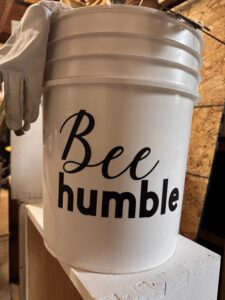
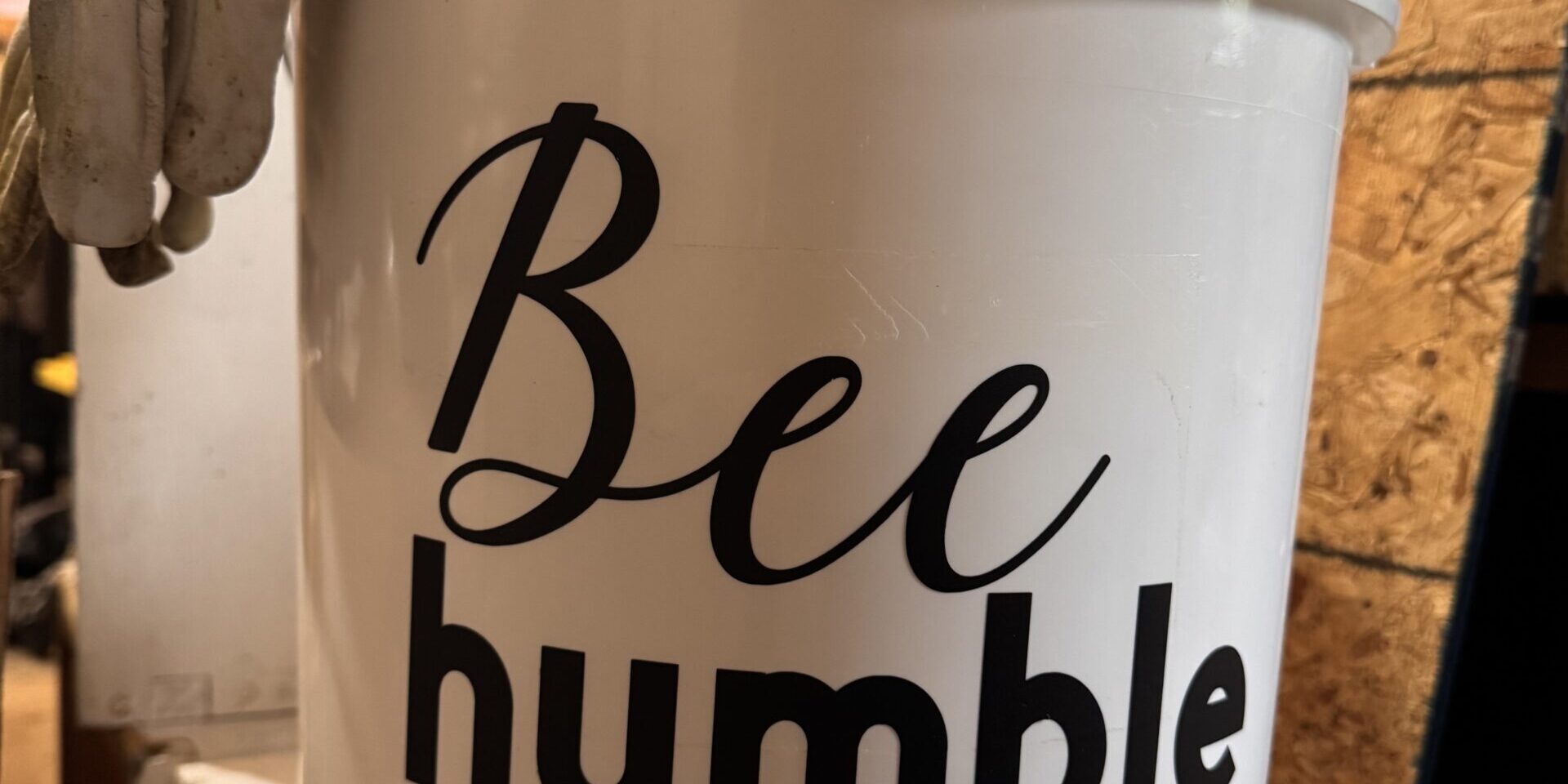
I decorated my hives with good reminders: Bee Happy, Bee Grateful, and Bee Kind. And my hive maintenance bucket that holds all my tools, treatments, and Benadryl is emblazoned with the message to Bee Humble. Important sentiments in and out of the apiary.
In other news from Wittbrich Acres
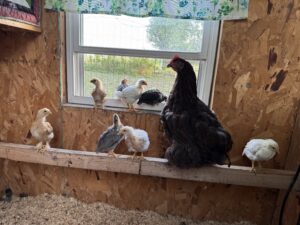
In other news, the eight chicks and their surrogate Mamasita are doing great! They’re getting big but still try to squeeze under Mama at night. It’s pretty comical to see eight good sized chickens all vying for space under wing and belly of one satisfied mother hen. We’ll be starting the integration process into the coop with the other hens shortly. That typically gets feathers flying.
My flock seems to have adjusted to the loss of head rooster, Colonel, and one-year-old Bingo continues his development as the new leader. Bingo and Norman still mix it up sometimes as they compete for the coveted alpha role, but size wins out over wisdom and Bingo has Norman by a wide margin in the size department.
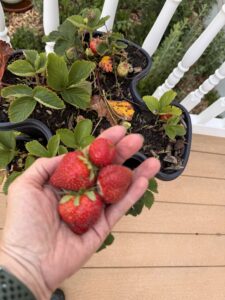
The gardens are actually growing this year and I’ve already harvested 300% more strawberries than I did last year. That sounds impressive, but in full disclosure, I did only get one fully ripe strawberry last season that Mike and I shared! So I’ll take the win this year!
For now, I’ll end with my thanks for your time to get caught up on life at Wittbrich Acres—our place of peace, harmony and gratitude.
Bee well until my next report, and let me know your questions, comments, and suggestions! Tami@toyourwealth.com